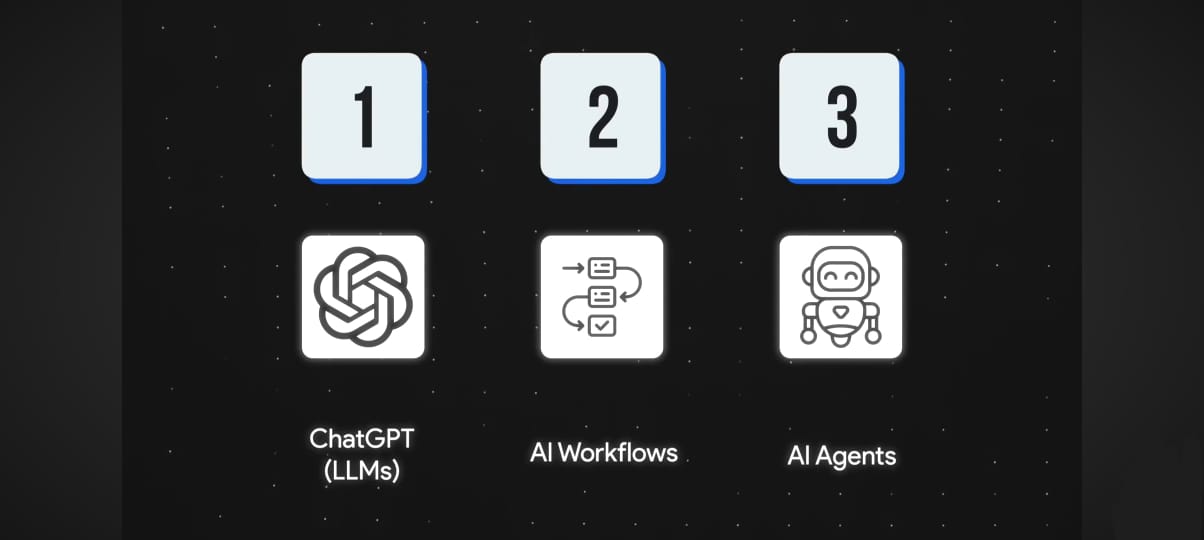
Artificial intelligence has evolved rapidly over the past few years, from simple chatbots answering questions to complex systems that can reason, act, and even improve themselves. This new generation of technology is powered by AI agents, a revolutionary form of automation that goes beyond static responses.
If you’ve ever wondered how AI agents work, this article will break it down in the simplest terms possible, helping you understand not just what they are, but how they are shaping the future of intelligent systems.
1. From Chatbots to Cognitive Systems
Before understanding how AI agents work, it helps to see where they came from. The early days of AI revolved around large language models (LLMs) like ChatGPT, Google Gemini, and Anthropic’s Claude. These systems could take your input, a question or a prompt and generate human-like responses.
For example, if you asked ChatGPT to draft an email, it could easily do so because it was trained on a vast dataset of human language. But if you asked it to tell you when your next meeting was, it would fail. Why? Because it doesn’t know your personal information as it’s not connected to your calendar or any real-world data.
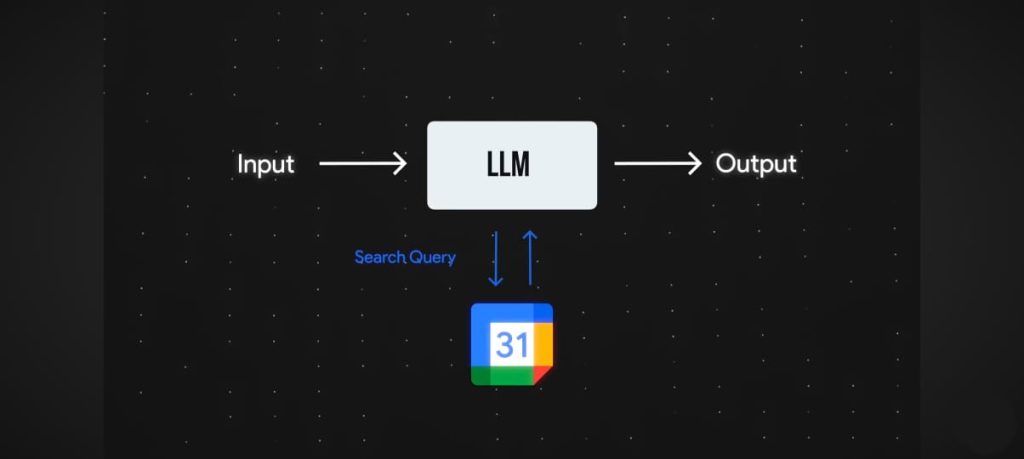
This limitation highlights the first problem LLMs face: they’re passive. They wait for input, respond based on training, and cannot act or fetch new information on their own. That’s where AI workflows and, eventually, AI agents come in.
2. What Are AI Workflows?
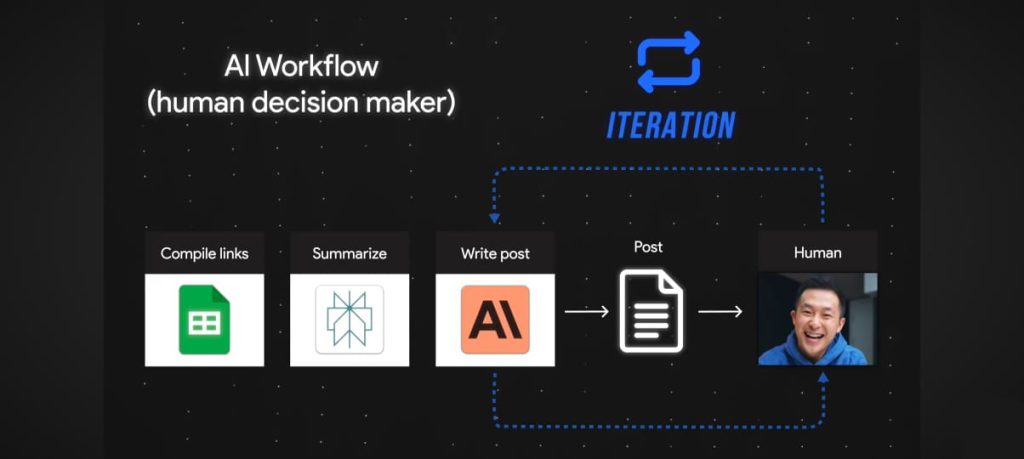
Imagine you’re trying to automate your daily routine say, gathering news headlines, summarizing them, and posting to LinkedIn. With AI workflows, you can design a series of steps that a system follows.
For instance:
- Pull articles from Google News.
- Summarize them using an AI tool like Perplexity.
- Draft social media posts using Claude or ChatGPT.
- Post them every morning at 8 a.m.
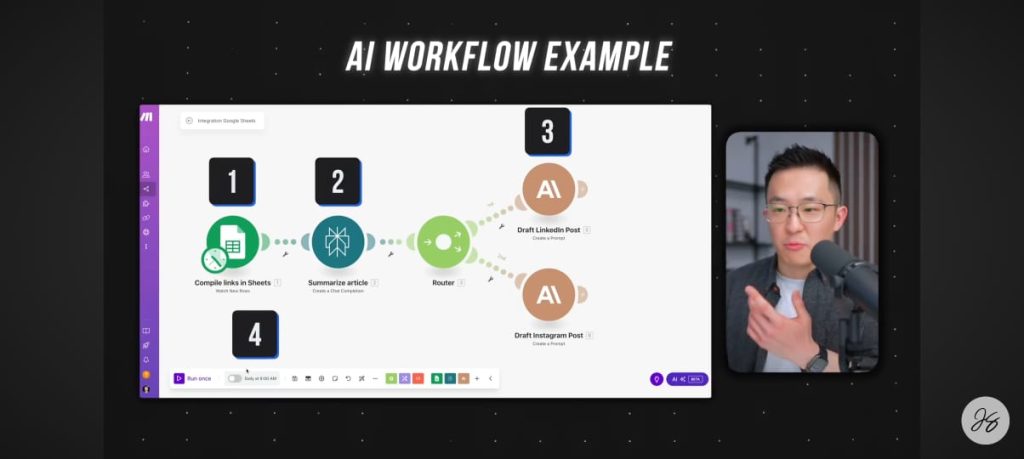
Each of these steps follows a predefined path something you, the human, programmed. The system doesn’t think for itself. If you want to tweak the tone or fix an error, you’ll need to go back and edit the workflow manually.
This setup is powerful but limited. It works perfectly as long as nothing changes. However, it can’t adapt, reason, or improve on its own qualities that define true AI agents.
3. Enter AI Agents: When Machines Start Thinking and Acting
Here’s where things get exciting. An AI agent takes the concept of a workflow and gives it a brain. Instead of you deciding every step, the AI itself decides how to achieve the goal.
Think of it this way: In a workflow, you tell the system what to do and how to do it. In an AI agent, you only give it the goal and it figures out the rest.
For example, if your goal is to “create engaging social media posts from trending news,” an AI agent will:
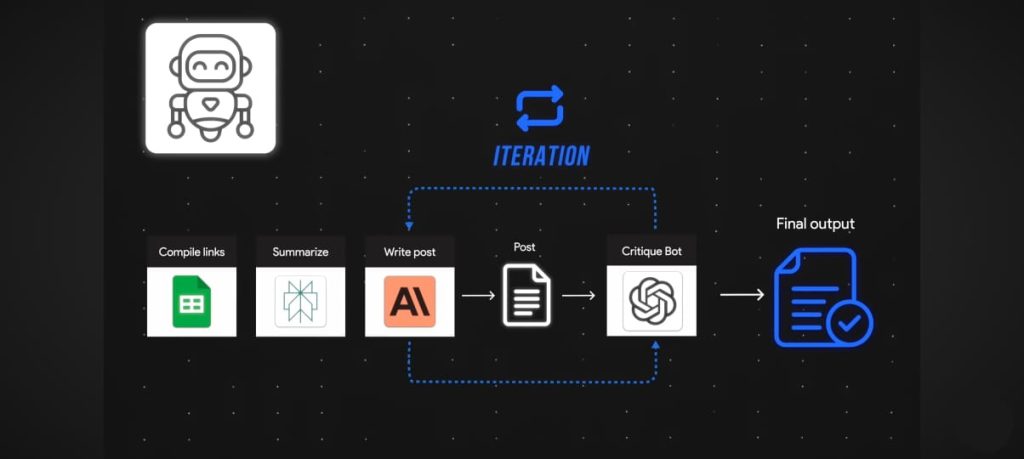
- Fetch relevant news articles.
- Summarize key points.
- Generate multiple post drafts.
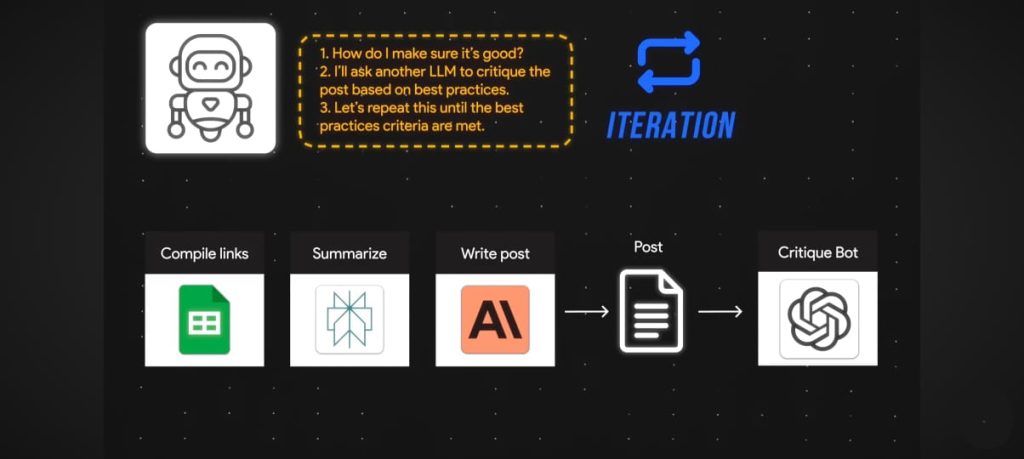
- Evaluate which draft aligns with best engagement practices.
- Iterate automatically until it’s satisfied with the result.

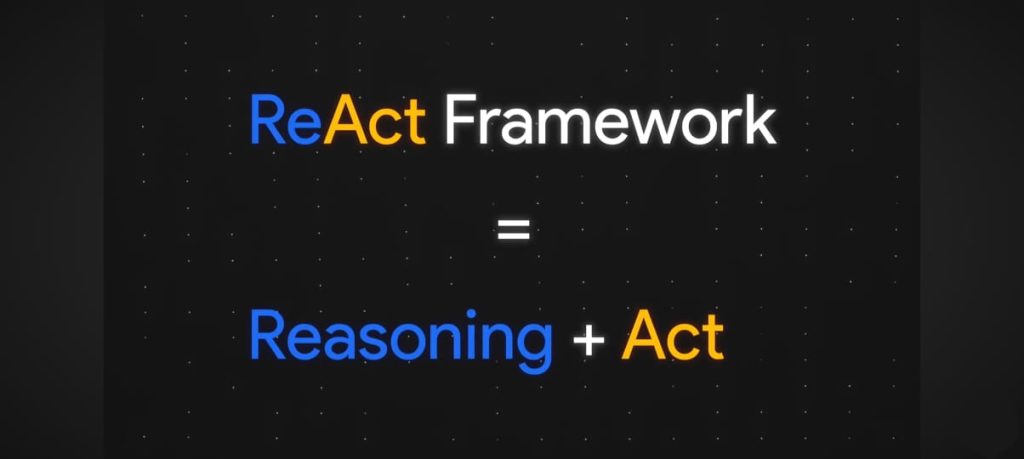
The key here is autonomy. The AI agent doesn’t just follow instructions, it reasons, acts, and improves without human micromanagement. This concept is often described using the Re-Act framework where agents “Reason” and then “Act” based on what they learn.
4. Breaking Down How AI Agents Work
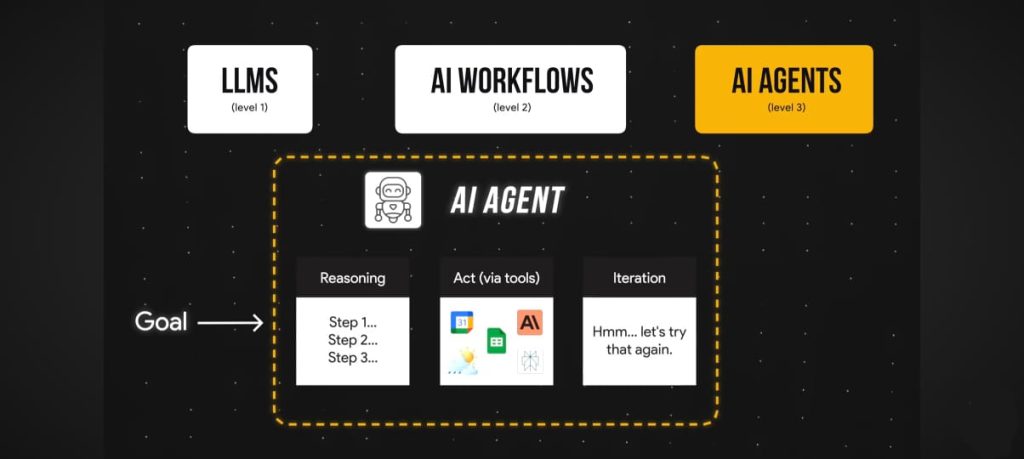
To fully grasp how AI agents work, let’s simplify the process into three layers of intelligence:
1. Reasoning
AI agents think logically about the best way to solve a problem. They plan steps, anticipate challenges, and choose tools to get results. This is similar to how a human might approach a task by thinking through the process before acting.
2. Action
After reasoning, the agent acts. It might use APIs, access your Google Sheets, search the web, send emails, or trigger workflows. This ability to interact with external tools is what makes AI agents so powerful.
3. Iteration
Unlike traditional automation, AI agents can evaluate their own work and improve it. For instance, if a LinkedIn post they generated doesn’t sound right, the agent can critique its own writing, identify what’s missing, and rewrite it all without human input.
This reasoning-action-iteration cycle is what separates AI agents from older systems. They’re not just reactive; they’re proactive and self-correcting.
5. Real-World Examples of AI Agents
AI agents aren’t just theoretical anymore; they’re being used in multiple industries today.
- Content Creation: Marketers use AI agents to plan, draft, and publish social media posts automatically.
- Customer Support: Companies are building agents that can resolve complex customer queries, escalate when needed, and learn from every interaction.
- Data Analysis: Agents can analyze live data, generate insights, and make real-time recommendations.
- Personal Productivity: Tools like AutoGPT and ChatGPT-based agents can schedule meetings, write reports, or summarize emails without manual commands.
For example, one popular demo by AI expert Andrew Ng shows a vision-based AI agent identifying clips of a skier in a video dataset. It reasons what a skier looks like, acts by scanning footage, and indexes clips, all autonomously. That’s how AI agents work in real-world applications: reasoning and taking intelligent action based on context.
6. Why AI Agents Matter
So, why should you care about AI agents? Because they represent the future of automation.
In the past, we had tools that could assist humans. Today, we’re building systems that can collaborate with humans. Tomorrow, they might operate entirely on their own, managing tasks we never thought could be automated.
This doesn’t mean AI agents will replace people. Instead, they’ll take over repetitive processes, freeing humans for creativity, strategy, and decision-making. As businesses integrate these systems, productivity and innovation are expected to skyrocket.
That’s why understanding how AI agents work is crucial, they’re not just another tech trend but a glimpse into the future of intelligent systems.
7. Challenges and the Road Ahead
Of course, there are challenges. AI agents require access to data, consistent oversight, and ethical boundaries. If an agent reasons incorrectly or acts on incomplete data, the results could be flawed or even risky.
Developers are working on frameworks to make agents more transparent and controllable, ensuring humans can always intervene when needed. In the near future, hybrid systems where humans and agents collaborate seamlessly will likely become the standard.
Read More: You’re Using AI Completely Wrong: Learn AI-Powered Creativity in Just 13 Minutes
Conclusion: The Age of Intelligent Agents Has Begun
We’re at a turning point in the AI revolution. The shift from simple chatbots to self-reasoning AI agents marks the dawn of a new era. These systems don’t just follow commands; they learn, adapt, and act independently to achieve goals.
Understanding how AI agents work helps us prepare for this transformation; whether you’re a business leader looking to automate processes or just someone curious about the next wave of intelligent tools.
The future isn’t about AI replacing humans; it’s about AI working with humans reasoning, acting, and evolving side by side. And that’s what makes this moment in technology so extraordinary.